
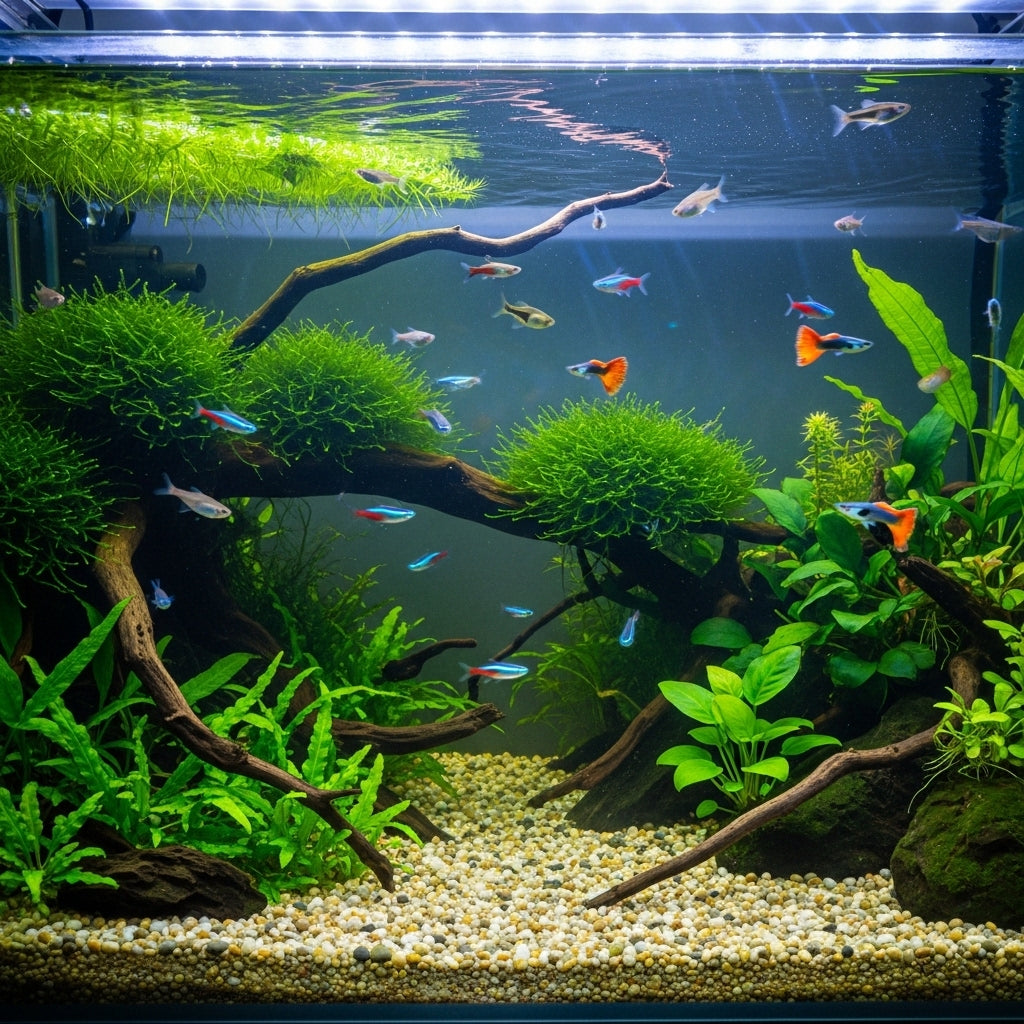
There's something magical about watching fish glide peacefully through a beautifully planted aquarium. It's like having a piece of the ocean in your living room. But if you're new to fishkeeping, the sheer amount of equipment, terminology, and advice can feel overwhelming. Don't worry—setting up your first aquarium is easier than you think when you know the basics.
This guide will walk you through everything you need to create a thriving underwater ecosystem. Whether you're dreaming of colorful tropical fish or a serene planted tank, these fundamentals will set you up for success.
1. Start With the Right Tank Size
Here's a counterintuitive truth: bigger tanks are actually easier to maintain than small ones. A larger volume of water is more stable—temperature fluctuations are gentler, and toxins get diluted more effectively. For beginners, we recommend starting with at least a 20-gallon (75-liter) tank.
Avoid those tiny 5-gallon bowls marketed for bettas. While they look cute, they're incredibly difficult to keep balanced and offer your fish minimal swimming space. Think of it this way: would you rather live in a closet or a studio apartment?
2. Essential Equipment You'll Actually Need
Don't let the pet store overwhelm you with gadgets. Here's what's truly essential:
Filter: This is your aquarium's life support system. It removes waste, circulates water, and houses beneficial bacteria. For beginners, a hang-on-back (HOB) filter or internal filter works great. Choose one rated for your tank size or slightly larger.
Heater: Unless you're keeping goldfish or other cold-water species, you'll need a heater to maintain tropical temperatures (75-80°F/24-27°C). Get an adjustable heater with a built-in thermostat—about 5 watts per gallon is the standard.
Lighting: If you're keeping live plants, invest in proper aquarium lighting. Most LED fixtures designed for planted tanks will do the job. If you're going artificial plants only, basic lighting for viewing is fine.
Thermometer: Essential for monitoring water temperature. The stick-on external ones work, but glass or digital thermometers are more accurate.
Water conditioner: Tap water contains chlorine and chloramine that will kill your fish. A good water conditioner neutralizes these chemicals instantly.
3. Understanding the Nitrogen Cycle
This is the most important concept in fishkeeping, and it's where most beginners fail. Here's the simple version:
Fish produce waste (ammonia) → Beneficial bacteria convert ammonia to nitrite → Different bacteria convert nitrite to nitrate → You remove nitrates through water changes.
The problem? Those beneficial bacteria don't exist in a new tank. Building up this bacteria colony takes 4-6 weeks—a process called "cycling." During this time, ammonia and nitrite levels can spike to toxic levels.
How to cycle your tank properly:
- Set up your tank with filter, heater, and decorations
- Add a source of ammonia (fish food or pure ammonia)
- Test water daily for ammonia, nitrite, and nitrate
- When ammonia and nitrite read zero and nitrate is present, your tank is cycled
- Only then add fish—and start with just a few
Patience here saves fish lives. Rushing this process is the number one reason new aquariums fail.
4. Choosing the Right Substrate
Substrate isn't just decorative—it provides surface area for beneficial bacteria and, if you have live plants, nutrients for roots.
Gravel: The most common choice. Easy to clean, available in many colors. Choose smooth, rounded gravel to protect bottom-dwelling fish.
Sand: Creates a natural look and is gentle on fish that like to dig. Slightly harder to clean but beautiful when done right.
Planted substrate: If you're serious about live plants, consider a nutrient-rich substrate designed for aquatic plants. It's pricier but makes a huge difference in plant growth.
Rinse any substrate thoroughly before adding it to your tank—even "pre-washed" products can be dusty.
5. Decorations and Plants Create a Habitat
Your fish need hiding spots and visual barriers to feel secure. Decorations aren't just for aesthetics—they reduce stress and encourage natural behaviors.
Live plants are fantastic for beginners. They absorb nitrates, produce oxygen, and create a more natural environment. Easy starter plants include Java fern, Anubias, Amazon sword, and Java moss.
Artificial plants work too if you're not ready for live ones. Just ensure they're made for aquariums and won't leach toxins.
Driftwood and rocks add character and hiding spots. Make sure rocks are aquarium-safe (avoid limestone which can alter water chemistry) and boil or soak driftwood before adding it.
6. Selecting Your First Fish
After your tank is cycled, it's time for the fun part—adding fish! But not all fish are beginner-friendly.
Great starter fish:
- Guppies: Colorful, hardy, and peaceful
- Tetras (neon, cardinal): Small schooling fish that look stunning in groups
- Corydoras catfish: Bottom dwellers that help keep the tank clean
- Platies: Active, colorful, and very forgiving of beginner mistakes
Avoid for now:
- Goldfish (need cold water and get huge)
- Oscars or other large cichlids (aggressive and messy)
- Discus (beautiful but extremely sensitive to water conditions)
Research compatibility before buying. Some fish are aggressive, some need specific water parameters, and some grow much larger than expected.
7. Feeding Without Overfeeding
Overfeeding is one of the top causes of aquarium problems. Uneaten food decays, spiking ammonia and creating water quality issues.
Feed small amounts 1-2 times daily—only what your fish can consume in 2-3 minutes. Most fish can easily go a day or two without food, so if you accidentally skip a feeding, don't panic and compensate with extra food later.
Quality matters too. Invest in good fish food specific to your species. Flakes work for surface feeders, pellets for mid-level swimmers, and sinking wafers for bottom dwellers.
8. Water Testing and Maintenance
Test your water weekly using a liquid test kit (avoid test strips—they're less accurate). Monitor:
- Ammonia: Should always be 0
- Nitrite: Should always be 0
- Nitrate: Keep below 20-40 ppm through water changes
- pH: Most community fish thrive in 6.5-7.5
Perform 20-25% water changes weekly. Use a gravel vacuum to remove debris from the substrate while siphoning out old water. Replace with temperature-matched, conditioned water.
9. Common Problems and Quick Fixes
Cloudy water: Usually bacterial bloom in new tanks. It'll clear on its own in a few days. If it persists, you're overfeeding.
Algae growth: Usually caused by too much light or excess nutrients. Reduce lighting to 6-8 hours daily and maintain your water change schedule.
Fish gasping at surface: Check your filter is working and consider adding an air stone for more oxygen.
10. Be Patient and Enjoy the Process
Aquarium keeping teaches patience. Things don't happen overnight, and that's okay. Your tank will go through phases—the ugly brown diatom algae stage, the green algae phase, and eventually, balance.
Take time to observe your fish. Learn their personalities, watch them interact, and enjoy the calming effect of your underwater world. There's a reason aquariums are found in doctor's offices and therapy centers—they genuinely reduce stress.


Leave a comment
This site is protected by hCaptcha and the hCaptcha Privacy Policy and Terms of Service apply.